“1984”: When the System Tells You What to Think
George Orwell's Nineteen Eighty-Four remains one of the most recognizable dystopian stories ever written. The 1984 film adaptation, directed by Michael Radford and starring John Hurt as Winston Smith and Richard Burton as O'Brien, brings Orwell's bleak vision to the screen with a world of surveillance, propaganda, rewritten history, and enforced conformity.
But 1984 isn't simply a story about a frightening government.
At its heart, it is a story about control.
Who controls information?
Who controls history?
Who controls language?
And ultimately, who controls your ability to think for yourself?
Those questions are part of what makes 1984 so enduring.
And they're also questions that fit naturally with the philosophy behind Designed by Concordia.
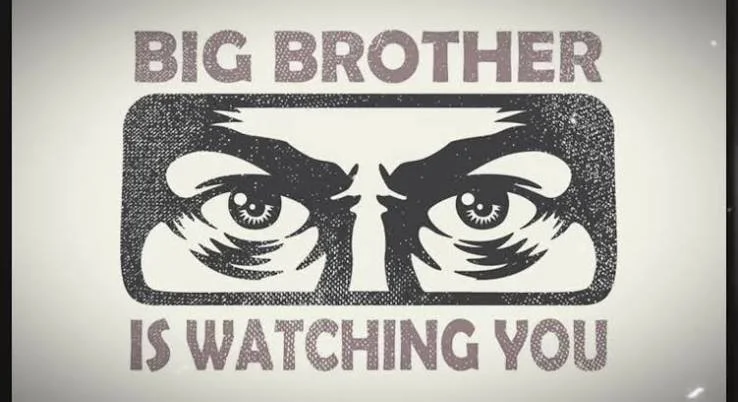
Big Brother Is Watching
In Orwell's world, privacy is almost nonexistent.
Citizens live beneath the constant presence of the Party and its telescreens. The government doesn't merely want to know what people are doing. It wants to influence what they think.
Winston Smith works at the Ministry of Truth, where his job involves altering historical records so that the past continually conforms to the Party's current version of reality.
The result is a society where truth isn't treated as something to discover.
Truth becomes whatever the system says it is.
That is one of the most disturbing ideas in 1984.
Because once a person can no longer distinguish between what actually happened and what they have been told happened, controlling the present becomes much easier.
The Most Dangerous Thing Winston Does
Winston's rebellion doesn't begin with a revolution.
It begins with a thought.
He starts questioning.
That is what makes his character so important.
The Party doesn't merely prohibit certain actions. It seeks conformity of thought itself. Orwell's novel explores the conflict between the individual and a system determined to eliminate independent thought.
Winston begins keeping a diary.
He remembers things.
He asks questions.
He tries to determine whether the official version of reality is actually true.
And that makes him dangerous.
Not because he is physically powerful.
Because he is thinking independently.
What Happens When You Stop Questioning?
This is where 1984 becomes more than a dystopian movie.
It becomes a warning about intellectual passivity.
A person doesn't necessarily have to be forced to surrender independent thought.
Sometimes it happens gradually.
You accept one explanation.
Then another.
You stop checking.
You stop questioning.
You stop remembering.
Eventually, you don't need someone standing over you telling you what to believe.
You simply accept the information placed in front of you.
That is why the ideas of 1984 continue to resonate.
The central concern isn't simply surveillance.
It's the relationship between information, power, language, memory, and individual thought.
Newspeak: When Language Becomes a Tool of Control
One of Orwell's most fascinating ideas is Newspeak.
The Party attempts to restrict language because controlling the words people have available can also restrict the thoughts they are capable of expressing.
Language isn't merely communication.
Language shapes how we describe reality.
If certain ideas become difficult—or impossible—to express, questioning the system becomes more difficult as well.
That makes Orwell's fictional language program one of the most memorable parts of the story.
It also connects to one of the recurring ideas behind Designed by Concordia:
Question everything.
Not because every answer is necessarily wrong.
But because questions are how we examine the answers we're given.
The Past Can Be Changed
One of the most chilling aspects of Winston's job is the rewriting of history.
Old newspaper articles are altered.
Records are changed.
People who have disappeared from favor effectively disappear from the historical record.
The past becomes something that can be edited.
And once enough records have been changed, how does an ordinary person prove what actually happened?
This gives 1984 another powerful theme:
Control the record, and you can influence people's understanding of reality.
The idea of preserving history therefore becomes extremely important.
Books.
Photographs.
Art.
Objects.
Stories.
Personal memories.
They can all become ways of remembering that the past existed independently of whatever version someone later presents.
Consume. Obey. Conform. Question.
The world of 1984 fits surprisingly well beside the visual language of Designed by Concordia.
CONSUME
OBEY
CONFORM
SUBMIT
These words can be read as commands.
But they can also be read as questions.
How much of what we consume is actually necessary?
How much of our behavior comes from habit?
How much of our thinking is influenced by the information surrounding us?
And at what point does conformity become so normal that we stop noticing it?
That's the space where the Concordia aesthetic meets the world of Orwell.
Not simply dystopia.
The examination of the systems surrounding us.
Coffee in a World of Control
There is also an interesting connection between 1984 and something much more ordinary:
coffee.
Roger Ebert noted that in Orwell's novel, some of Winston's strongest expressions of personal desire revolve around simple contraband pleasures, including coffee, chocolate, and strawberry jam.
That detail is easy to overlook.
In a world designed to control nearly every aspect of human existence, ordinary pleasures become meaningful.
A cup of coffee can become a small personal ritual.
Something you choose.
Something you enjoy.
Something that belongs to you.
And that's where coffee fits naturally into the Concordia philosophy.
Mushroom Fuse Instant Coffee
Mushroom Fuse Instant Coffee — Medium Roast
For the person who starts the morning by reading, thinking, researching, and questioning, Mushroom Fuse Instant Coffee offers a convenient coffee ritual.
It's a medium-roast instant coffee made with Arabica coffee, organic Lion's Mane, and organic Chaga mushroom powders.
Smooth coffee.
Earthy mushroom notes.
Instant convenience.
Add hot water, stir, and start the day.
Question everything. Drink coffee.
Rich Hazelnut Coffee: The Ritual of the Morning
Rich Hazelnut Coffee — Medium Roast
Not every morning needs to begin with dystopian philosophy.
Sometimes you simply want a good cup of coffee.
Rich Hazelnut Coffee is a medium-roast 100% Arabica whole-bean blend featuring roasted hazelnut, maple sweetness, chocolate depth, and subtle citrus brightness.
Grind the beans.
Prepare your coffee.
Sit down.
Think.
Read.
Question.
Then begin the day.
In a world increasingly filled with notifications, algorithms, advertisements, and endless information, taking a few minutes to enjoy a deliberate morning ritual can feel remarkably simple.
And sometimes simple is exactly what we need.
Complete Multivitamin Complex
The 1984 connection doesn't have to stop with coffee.
A daily routine can also include nutritional support.
The Complete Multivitamin Complex combines vitamins and minerals with botanical ingredients and antioxidant, immune-support, and men's-health blends.
It contains vitamins A, C, D, E, a range of B vitamins, minerals, and additional botanical ingredients.
Take two capsules in the morning with a meal, according to the product's suggested use.
It's another simple component of a consistent morning routine.
Your Morning. Your Ritual. Your Thoughts.
Perhaps that's the most interesting connection between Orwell and the products.
1984 presents a world where virtually every part of life is controlled.
Designed by Concordia is interested in something very different:
individual choice.
Choose what you read.
Choose what you watch.
Choose what you consume.
Choose what you question.
Choose what deserves your attention.
And, occasionally, put the phone down and drink your coffee.
Why 1984 Still Matters
When George Orwell wrote Nineteen Eighty-Four, he wasn't simply attempting to predict a specific future. The novel was shaped by the political realities and anxieties of Orwell's own time, including authoritarianism, propaganda, conformity, and the aftermath of World War II.
That's part of why the story has survived.
The technology changes.
The political circumstances change.
The vocabulary changes.
But the underlying questions remain remarkably durable.
Who controls the information?
Who decides what is true?
Who controls the historical record?
How much freedom does an individual have to think independently?
And perhaps the simplest question of all:
Are you thinking for yourself?
That's the question Orwell leaves behind.
And it's a question worth asking.
Question everything.
Drink coffee.
Stay awake.
Designed by Concordia
Shop Designed by Concordia