Eye of Horus vs Eye of Ra: Understanding the Difference Between Two Ancient Egyptian Symbols
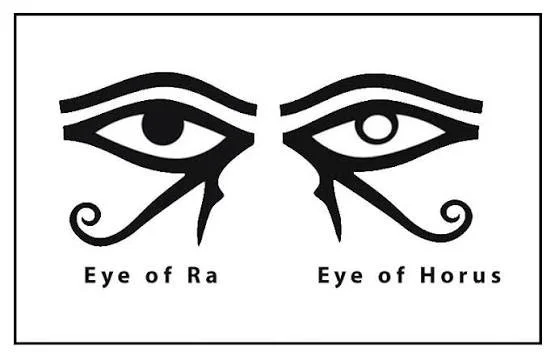
Eye of Horus vs Eye of Ra
Ancient Egyptian civilization created some of the most recognizable symbols in human history. Among the most famous are the Eye of Horus and the Eye of Ra.
At first glance, they may look similar. Both are represented as powerful eyes and are connected to ancient Egyptian beliefs. However, they represent different ideas and carry different meanings.
Understanding the difference between these two symbols reveals how ancient Egyptians used imagery to communicate concepts such as protection, power, balance, and awareness.
What Is the Eye of Horus?
The Eye of Horus is an ancient Egyptian symbol associated with healing, protection, restoration, and balance.
Horus was a major figure in Egyptian mythology, often represented as a falcon or a human with a falcon head. He was connected with:
Kingship
The sky
Protection
Justice
According to Egyptian mythology, Horus lost his eye during a conflict with Set, a god associated with chaos and disorder. The eye was later restored, creating a powerful symbol of healing and renewal.
Because of this story, the Eye of Horus became associated with:
Recovery after hardship
Protection from danger
Restoration of balance
Wholeness and renewal
The deeper message of the Eye of Horus is:
What is broken can be restored.
What Is the Eye of Ra?
The Eye of Ra is associated with the sun god Ra, one of the most important deities in ancient Egyptian religion.
Ra represented:
The sun
Creation
Life energy
Authority
Divine power
The Eye of Ra was often portrayed as an extension of Ra's power. It could represent protection, but it was also connected with strength, judgment, and the force of the sun.
Unlike the Eye of Horus, which is often associated with healing and restoration, the Eye of Ra is more connected with:
Power
Protection through strength
Authority
The destructive and creative forces of nature
The Eye of Ra represents the idea of powerful energy that can both create and destroy.
Similarities Between the Eye of Horus and Eye of Ra
Although they have different meanings, both symbols share important similarities.
Both represent:
Protection
Awareness
Divine connection
The power of sight
The ability to see beyond the ordinary
In ancient Egyptian thought, the eye was more than an organ of vision. It represented knowledge, perception, and understanding.
To see was to know.
Why Are They Confused Today?
The confusion between the Eye of Horus and the Eye of Ra comes from their similar appearance and shared cultural background.
Both symbols:
Come from ancient Egypt
Use eye imagery
Are associated with protection
Have been used in jewelry and artwork
Over time, modern culture has sometimes combined their meanings or used them interchangeably.
However, their traditional meanings are different.
The Eye of Horus focuses more on healing, restoration, and balance.
The Eye of Ra focuses more on power, authority, and protection through strength.
The Meaning of These Symbols Today
Like many ancient symbols, the meaning of the Eye of Horus and Eye of Ra depends partly on the person interpreting them.
Some people connect with these symbols because of their historical importance.
Others connect with them because they represent personal ideas:
The Eye of Horus may represent:
Growth after hardship
Inner healing
Awareness
Finding balance
The Eye of Ra may represent:
Strength
Confidence
Protection
Personal power
Symbols continue to survive because they allow people to connect with ideas that remain meaningful across generations.
Designed by Concordia: Ancient Symbols, Modern Meaning
At Designed by Concordia, we explore the connection between history, symbolism, art, and personal expression.
Ancient symbols continue to inspire because they represent ideas that are still relevant today: awareness, transformation, protection, and the search for understanding.
The Eye of Horus, Memento Mori, and other symbolic designs remind us that objects can carry deeper meanings beyond their physical appearance.
Explore Designed by Concordia and discover artwork, apparel, and products inspired by symbolism, history, and timeless ideas.
How the Images Differ: Eye of Horus vs Eye of Ra
Although the Eye of Horus and Eye of Ra can look similar, there are visual differences that can help distinguish them.
The Eye of Horus: The More Recognizable Symbol
The Eye of Horus is usually identified by the markings beneath the eye that resemble the natural markings of a falcon.
Common visual features include:
A curved line extending below the eye, similar to a falcon's cheek marking
A spiral or curved design below the eye
A more balanced and symmetrical appearance
A connection to the right eye in many traditional depictions
The symbol is often shown as a complete, restored eye, representing healing, protection, and wholeness.
The markings beneath the eye are one of the easiest ways to identify the Eye of Horus.
The Eye of Ra: Similar Shape, Different Meaning
The Eye of Ra often uses a similar eye design, but it is usually connected with the sun and the power of the goddess associated with Ra.
Visual differences can include:
A stronger connection to the sun symbol
A more intense or powerful appearance
Association with a cobra (uraeus) or solar imagery in many depictions
Use of the left eye in some traditional interpretations
The Eye of Ra is often shown as a symbol of divine power and protection through strength.
A Simple Way to Remember the Difference
A helpful way to remember the difference:
Eye of Horus = Healing, Restoration, Balance
Think:
"The eye that was damaged and restored."
Eye of Ra = Power, Protection, Authority
Think:
"The eye that carries the force of the sun."
Why the Confusion Continues
The confusion exists because both symbols share the same basic design: an ancient Egyptian eye.
Over thousands of years, artists, historians, and modern designers have interpreted these symbols in different ways. Some modern versions combine elements from both traditions, making them harder to separate visually.
The deeper meaning behind both symbols, however, remains connected:
The desire to understand, protect, and see beyond the surface.
Visit: